Contents
Telegram bots and Mini Apps let a business work with customers where they already spend their time — without installing a separate app. A bot suits notifications, bookings, simple orders and conversational support. A Mini App is a full web interface inside Telegram: catalogue, cart, account area and payment.
Here is how they differ, which tasks they solve, how they work technically and when Telegram can replace a mobile app.
How does a bot differ from a Mini App?
A bot talks to the user with messages and buttons, while a Mini App opens a web page with a familiar interface inside Telegram. Bots are good for short two- or three-step flows; Mini Apps for anything involving choosing, browsing and filling in forms.
| Criterion | Bot | Mini App |
|---|---|---|
| Interface | Messages, buttons, menus | A web page inside Telegram |
| Best for | Notifications, bookings, statuses, support | Catalogues, carts, account areas, complex forms |
| Development | Backend and conversation flows | Backend and a web frontend |
| Time to launch | Faster | Longer, but richer |
In practice they are often combined: the bot sends notifications and opens the Mini App with a button.
Which business tasks do bots and Mini Apps solve?
Bots and Mini Apps solve tasks where customers want information fast or need to take a simple action. The main advantage is that messenger notifications are read far more willingly than emails, and signing in needs no registration or password.
- bookings — salons, clinics, services, training sessions;
- orders — food delivery, repeat orders of supplies, shops with a small catalogue;
- statuses — order packed, courier on the way, application reviewed;
- support — answers to common questions and handover to an operator;
- internal processes — approvals, employee requests, reports for management;
- loyalty programmes — bonus balance and personal offers.
For answering common questions with language models, see LLM customer support chatbot.
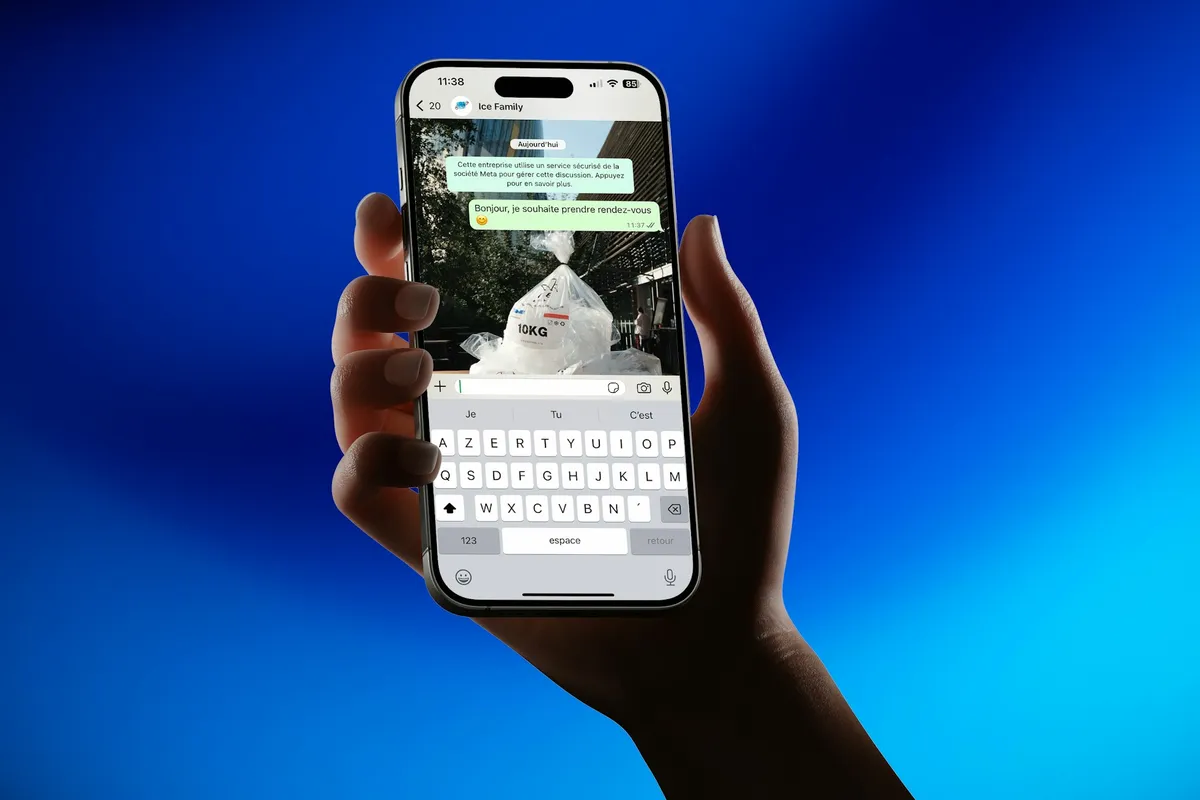 Photo: Unsplash
How does a bot work technically?
A bot is a backend that receives events from Telegram via a webhook, processes them and replies through the Bot API. A Mini App is an ordinary web application that Telegram opens in its built-in browser, passing it signed user data.
Key components:
- Webhook. Telegram sends every message and button press to your server's URL.
- Conversation state. The backend remembers which step of the flow the user is on.
- Queue for broadcasts. Mass notifications go through a queue that respects platform limits.
- Signature check. User data from a Mini App is verified on the backend, or it could be forged.
- Integrations. The bot works with the same database, CRM and ERP as the website — see 1C and CRM integration.
What are the platform's limits?
Telegram limits message sending rates and file sizes and has rules for certain product categories. You also depend on the platform: a rule change or a bot ban can cut off a sales channel, so important customer data must be stored on your side.
- limits on mass messaging — broadcasts must be spread over time;
- a bot cannot message a user first until they have started it;
- rules for digital goods and certain business types;
- dependence on the messenger's availability in your customers' country.
Can Telegram replace a mobile app?
Telegram can replace a mobile app if your audience actively uses the messenger and your flows fit into catalogue, order, booking and notifications. Launching is cheaper and faster: no store publishing and no separate development for two platforms.
When you still need an app:
- complex offline mode, camera work, background location or sensors;
- a product where your own brand and an experience free of third-party UI matter;
- an audience that does not use Telegram.
More on the choice in mobile app or website and PWA instead of a mobile app.
In short
- A bot is dialogue and buttons for short flows; a Mini App is a full web interface inside Telegram.
- They handle bookings, orders, statuses, support and internal processes well.
- Technically it is a backend with webhooks, conversation state and a broadcast queue.
- Respect platform limits and rules, and keep customer data on your side.
- For many businesses Telegram is a fast, inexpensive alternative to a mobile app.
FAQ
Can a Telegram bot accept payments?
Yes. For physical goods and services, a payment provider is connected through built-in payments, and a Mini App can open a regular payment page. Digital goods have their own platform rules worth checking in advance.
Does a bot need its own server?
A bot needs a backend that receives webhooks from Telegram. If you already have a website or CRM on your own server, the bot usually becomes another module of that backend.
How does a bot know a user is my customer?
Through account linking: the user shares a phone number or opens a personal link from their account area. A Mini App also receives signed user data that the backend verifies.